Your 2020 Penny Value — From 1¢ to $5,040
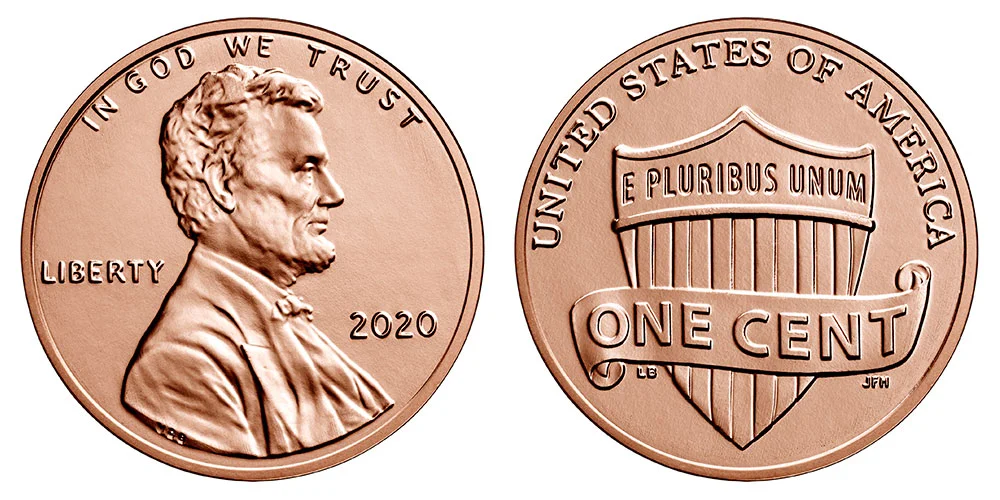
A 2020-D Lincoln Shield penny in MS68RD sold for $5,040 at Heritage Auctions in January 2021 — making it the most valuable business-strike 2020 cent ever recorded. Most circulated 2020 pennies are worth face value, but high-grade Red specimens and confirmed error varieties can be worth serious money. This free calculator and guide shows you exactly where your coin falls.
Free 2020 Penny Value Calculator
Select your mint mark, condition, and any errors below to get an instant estimate.
If you haven't identified your coin's mint mark or condition yet, there's a free 2020 Penny Coin Value Checker that lets you upload a photo and get an AI-assisted starting point before using this calculator.
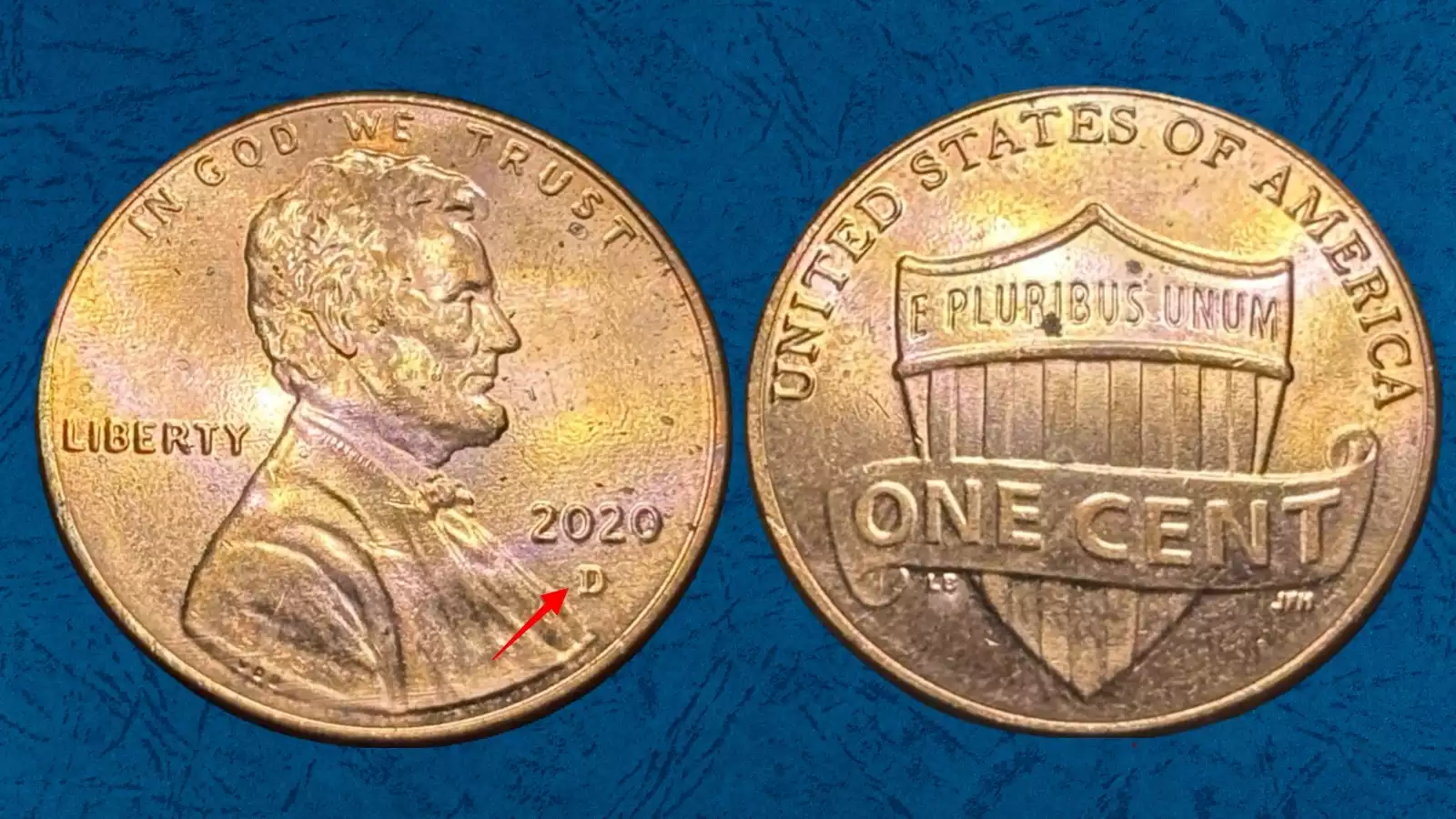
2020 DDO (Doubled Die Obverse) Self-Checker
The Doubled Die Obverse is the most searched and most collectible error on 2020 pennies. Use this visual guide and checklist to see if you have one.
- Letters in LIBERTY are crisp and single
- Date numerals are clean with no shadow
- Lincoln's eye shows one clear outline
- Shield lines on reverse are distinct
- LIBERTY letters show raised doubled edges
- Date numerals appear doubled or split
- Lincoln's eye has a visible secondary impression
- IN GOD WE TRUST may show doubling on strong varieties
Check your coin — tick each feature that applies:
Want a number, not just a yes/no? Run your coin through the free value calculator to get an estimated dollar range based on your mint mark, condition, and errors.
→ Use the Value CalculatorThe Valuable 2020 Penny Errors (Complete Guide)
Every variety card below covers a documented error on 2020 Lincoln Shield cents — what it is, how to spot it, and what certified examples sell for. These errors appear on both the Philadelphia (no mint mark) and Denver (D) issues unless noted. Bring a 10× loupe before you read on.
Doubled Die Obverse (DDO)
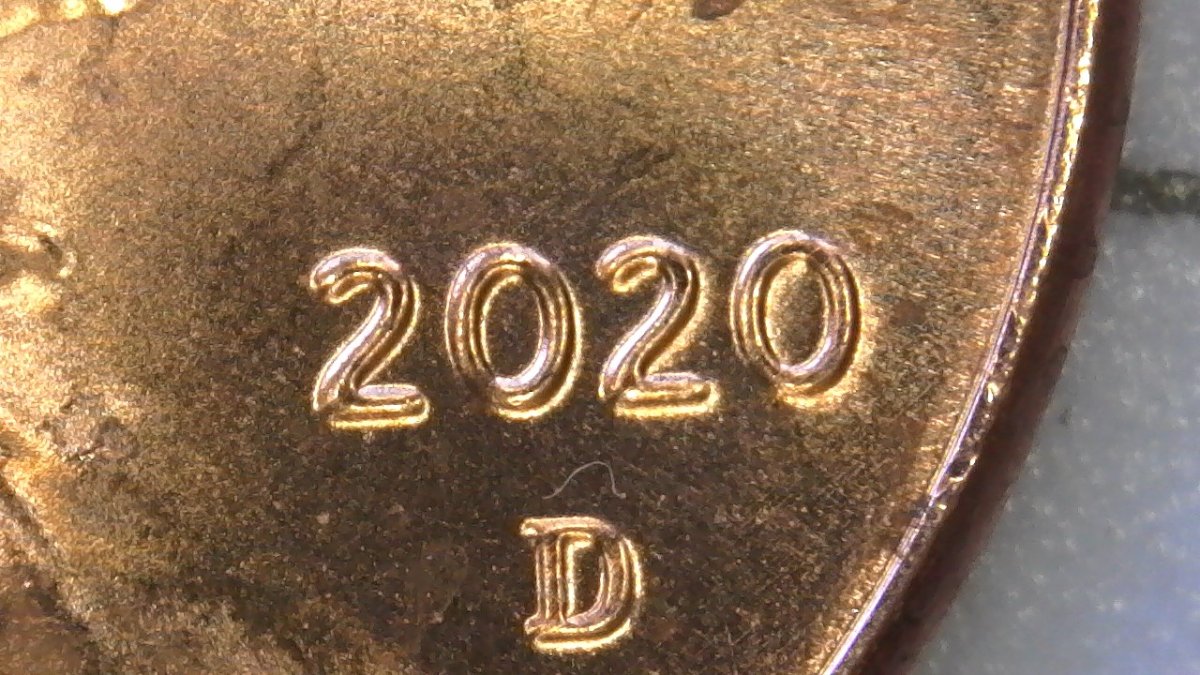
The Doubled Die Obverse occurs during the die-making process when the working die receives a second hubbing impression at a slightly misaligned angle. This imprints a duplicate of the design onto the die, which is then transferred to every coin struck from that die. On 2020 Lincoln cents, confirmed DDO varieties have been catalogued including WDDO-001, which shows moderate spread on the date numerals and LIBERTY lettering.
To identify a genuine DDO, look for hub-style doubling: raised, rounded secondary impressions on both sides of the affected letters. This is distinct from mechanical doubling, which leaves a flat, shelf-like shadow with no depth. Under a 10× loupe, a true DDO shows clear separation between the primary and secondary impressions in LIBERTY, the date, and sometimes Lincoln's eyebrow and eyelid.
Collectors pay a premium for DDOs because they represent a genuine die manufacturing defect — every coin from that die carries the same doubling, making it a documentable variety rather than a random accident. The premium scales with the degree of spread: minor doubling adds $25–$50, while strong examples catalogued in Wexler's Die Variety News can reach $100–$150 in MS67RD and significantly more if professionally certified.
Doubled Die Reverse (DDR)
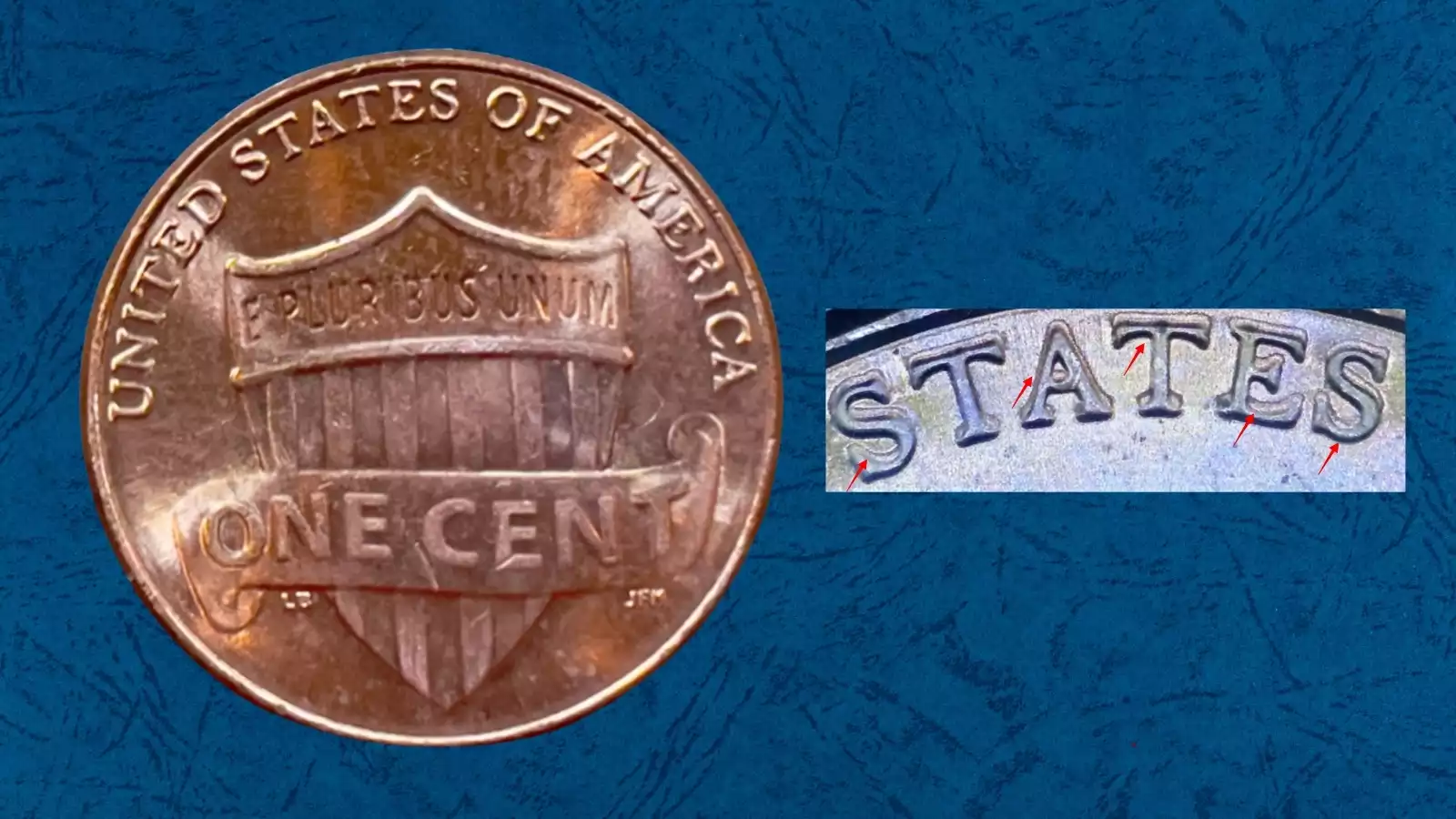
The Doubled Die Reverse follows the same hub-misalignment mechanism as the DDO, but the doubling occurs on the working die used to strike the coin's reverse — the Union Shield side. On 2020 Lincoln Shield cents, DDR errors manifest as doubled lettering in "ONE CENT," "E PLURIBUS UNUM," or "UNITED STATES OF AMERICA," and occasionally as thickened or doubled horizontal and vertical shield bar lines.
To locate DDR doubling, flip the coin and examine the "ONE CENT" inscription at the bottom of the reverse with a 10× loupe. Look for the same raised, rounded secondary impression you'd seek on a DDO — two distinct sets of letter edges with genuine depth, not a flat mechanical shadow. Thickened vertical lines within the shield can also indicate reverse doubling, though these require comparison with a known DDR reference image from doubleddie.com.
Reverse doubled dies on modern Lincoln cents typically command smaller premiums than obverse varieties because the doubling is less immediately visible. Nevertheless, moderate-to-strong 2020 DDR examples — particularly those affecting "ONE CENT" — sell for $10–$30 in lower Mint State, and $50–$75+ in certified MS67RD. The Denver Mint produced several documented DDR varieties worth tracking in 2020.
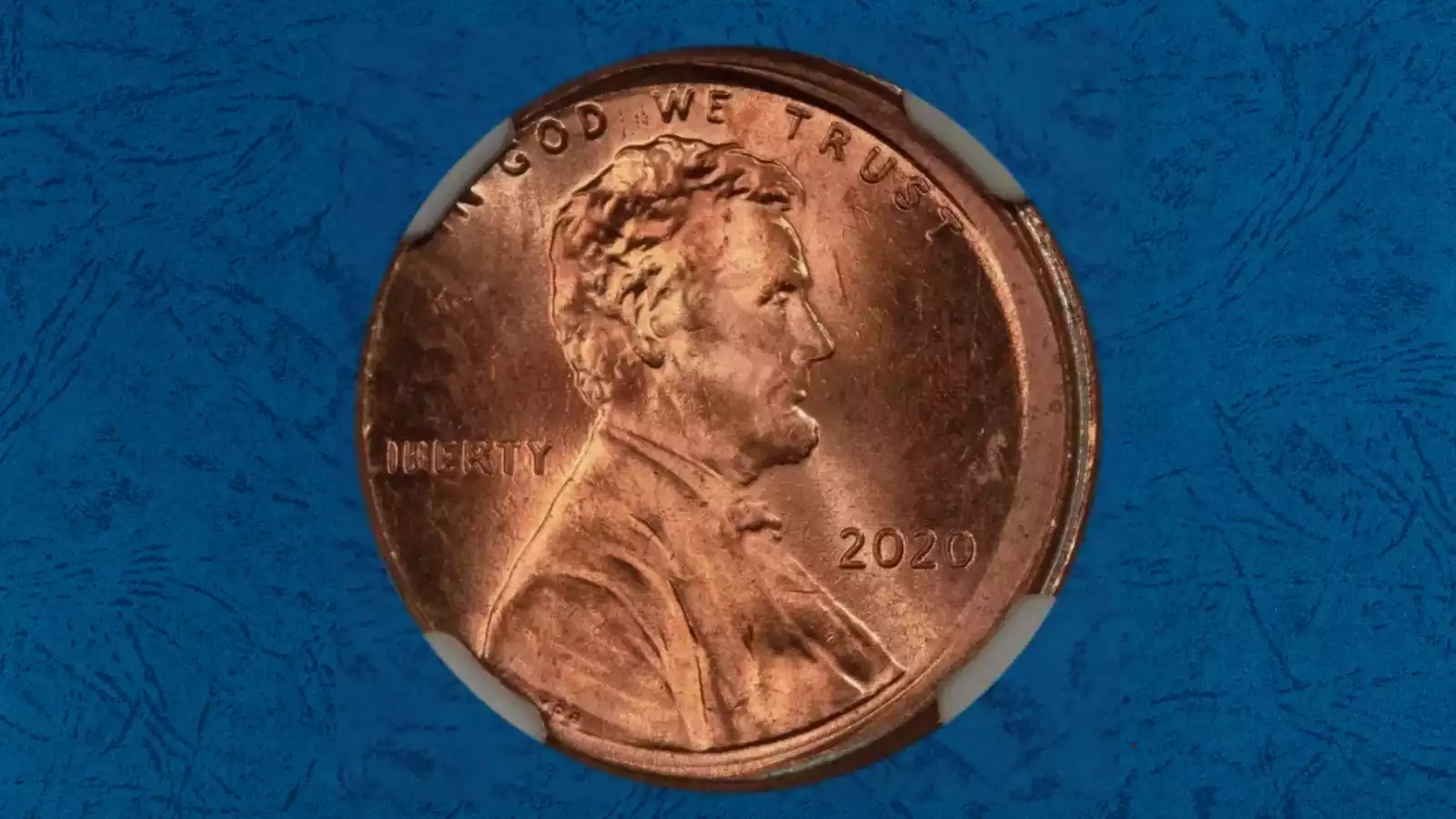
Off-Center Strike Error
An off-center strike occurs when the planchet (blank coin disc) is not properly centered between the dies at the moment of striking. Instead of the design landing squarely in the middle, part of the coin receives no impression at all, leaving a visible blank copper-plated zone around one edge of the coin. On 2020 Lincoln cents, this error produces an immediately recognizable coin where Lincoln's portrait or the shield is partially missing.
The amount of off-center shift is expressed as a percentage of the coin's diameter. Coins that are 5%–10% off-center are the most commonly encountered — these show only a thin blank crescent near one edge and are worth $10–$20 each. The most desirable off-center strikes are those approximately 50% off-center that still retain a fully readable date on the struck area. When the date is visible on a 50% off-center example, collector demand and value both increase substantially.
A 50% off-center 2020 penny with a complete, legible date is worth approximately $100–$150. The date visibility rule matters because it confirms the coin's year without ambiguity — undated off-center cents, while dramatic, are significantly less valuable to type collectors. Both Philadelphia and Denver issues can exhibit this planchet positioning error, as it originates in the coin press feed mechanism, not the die itself.
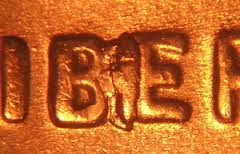
BIE Die Crack Error
The BIE error is a die crack that develops along the obverse die in exactly the position between the letters "B" and "E" in the word "LIBERTY." As the die deteriorates through extended use, a crack forms and metal from the planchet flows into it during each subsequent strike. The result is a raised vertical line on every coin struck from that die — a line that looks remarkably like a capital letter "I" inserted into the word, creating the appearance of "LIBIERTY."
Despite its unusual appearance, the BIE is not a spelling error — it's a die deterioration artifact unique to Lincoln cents, where the LIBERTY inscription runs across the obverse field in a position that happens to perfectly frame die crack formation. Under normal lighting, the BIE line is visible to the naked eye on strong examples. Under a 10× loupe it's unmistakable: a raised line with rounded edges extending from the rim area down through the field between the B and E.
BIE varieties are collectible as a class across all Lincoln cent dates. Some collectors specifically build date sets of BIE cents, making demand consistent across years including 2020. The value range of $5–$15 reflects the common occurrence of die cracks generally, but choice examples on high-grade uncirculated 2020 cents can push toward the upper end. A 2020 BIE in MS65RD or better is a coin worth keeping.
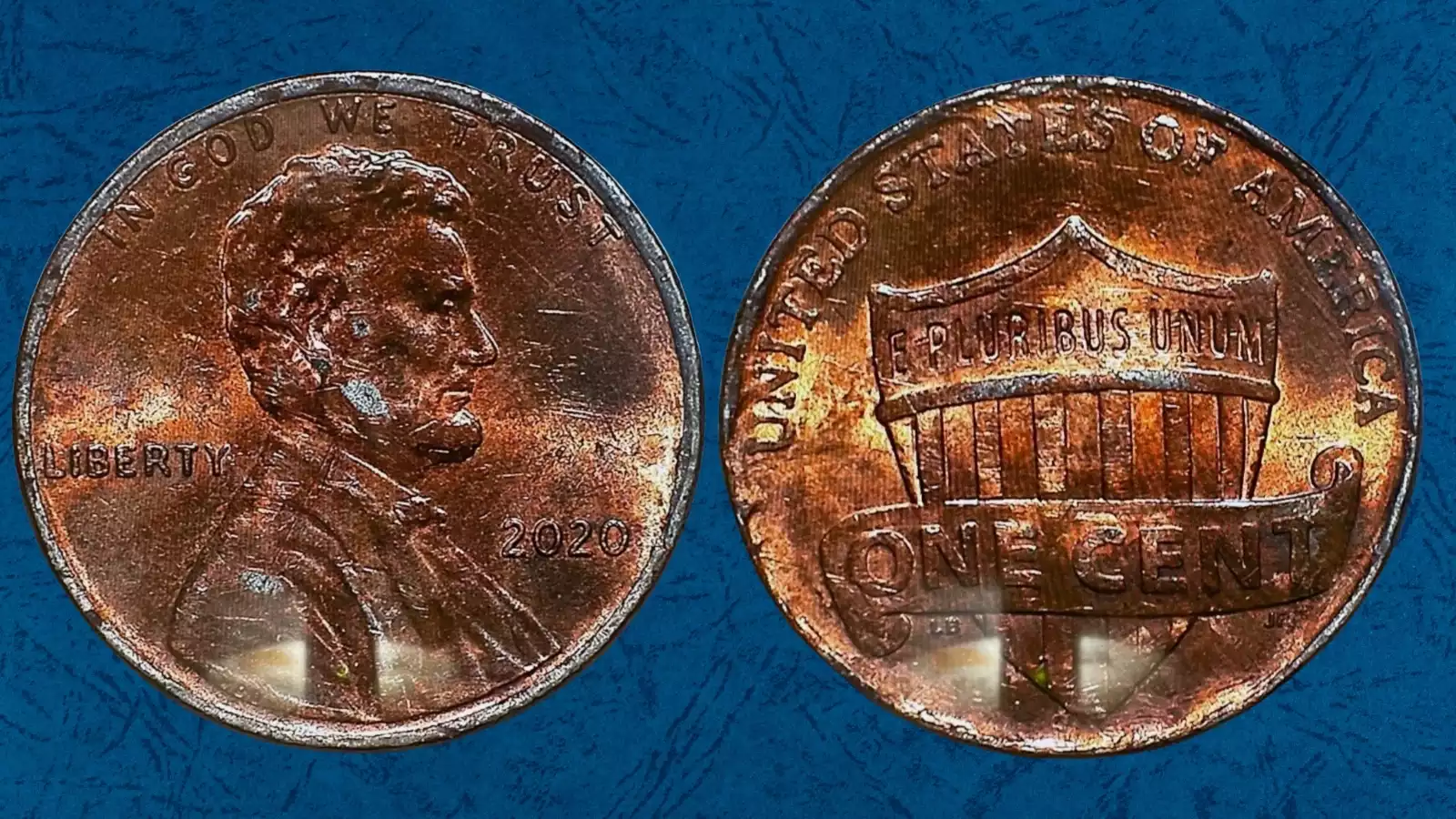
Wrong Planchet Error
A wrong planchet error occurs when a coin press accidentally feeds in a blank intended for a different denomination — or even a different coin series — and strikes the cent dies on it. On 2020 Lincoln cents, documented wrong planchet errors include coins struck on dime planchets (smaller in diameter and struck in copper-nickel clad rather than copper-plated zinc). The result is a Lincoln cent design partially cramped onto a smaller disc, with the edges of the design visibly cut off where the smaller planchet diameter ends.
The visual diagnostic is straightforward: hold the coin next to a normal 2020 penny. A wrong-planchet cent will be measurably lighter (a dime planchet weighs 2.27g vs. a cent's 2.50g), smaller in diameter if struck on a dime blank (17.9mm vs. 19.05mm), and may appear silver-colored if the host planchet was clad rather than copper-plated zinc. The design will also appear shifted or truncated where it extends beyond the smaller planchet's edge.
Wrong planchet errors are among the rarest and most desirable of all modern Lincoln cent errors because they require a specific set of circumstances: a foreign planchet finding its way into the penny press feeding mechanism and escaping quality control. Confirmed, professionally attributed wrong planchet 2020 cents have been reported to sell in the $300–$600 range at Heritage Auctions and Stack's Bowers, with the most dramatic examples (larger size difference, dramatic truncation of design) commanding the top of or exceeding that range.
2020 Penny Mintage & Survival Data
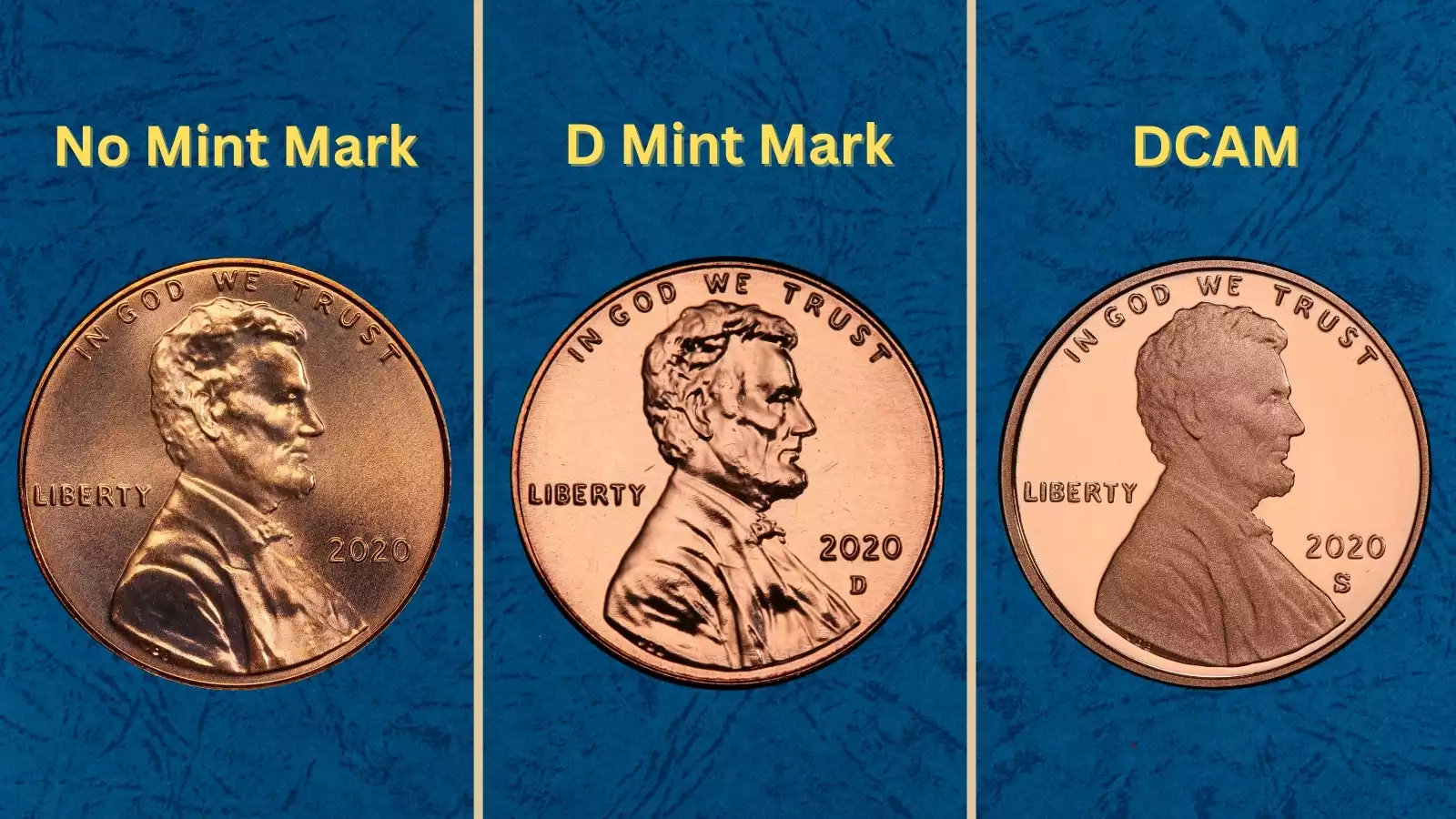
Combined production of 2020 Lincoln Shield cents exceeded 7.5 billion business-strike coins — one of the largest single-year cent outputs in recent history. Despite this, top-grade Red specimens (MS68RD and above) are genuinely scarce due to handling in high-volume distribution channels.
| Mint | Mint Mark | Strike Type | Mintage | Composition |
|---|---|---|---|---|
| Philadelphia | None (P) | Business Strike | 3,560,800,000 | Copper-plated Zinc |
| Denver | D | Business Strike | 4,035,600,000 | Copper-plated Zinc |
| San Francisco | S | Proof (Collector) | 823,909 | Copper-plated Zinc |
| Total | — | — | 7,596,400,000+ | — |
Composition specs: 99.2% zinc core with 0.8% copper plating. Weight: 2.50 g. Diameter: 19.00 mm. Edge: plain (smooth). Obverse designer: Victor David Brenner (portrait), modified. Reverse: Union Shield, introduced 2010. Proof coins from San Francisco were sold exclusively in collector proof sets and were never circulated.
Condition scarcity paradox: Denver's higher mintage actually produced rarer high-grade survivors. Denver coins entered wider distribution channels, resulting in more contact marks. PCGS reports approximately 150 known 2020-D MS68RD coins and fewer than 10 known in MS69RD, versus roughly 200 known 2020-P MS68RD examples.
Found one of these errors on your coin? Now get a specific dollar estimate — plug in your mint mark, condition, and error type to see the value range.
→ Get My Coin's ValueDescribe Your Coin for a Detailed Assessment
Describe what you see on your 2020 penny in plain language below — our keyword-matching analyzer will give you a tailored assessment.
Mention these things if you can
- Mint mark (D, S, or none)
- Doubling on LIBERTY or date
- Color (red, brown, toned)
- Off-center or blank area
- Raised line between B and E
Also helpful
- Weight (should be 2.5g)
- Scratches or contact marks
- Shiny or dull luster
- Any unusual color (silver?)
- Whether it was in a roll or found in change
2020 Penny Value Chart at a Glance
The table below gives realistic value ranges for all major 2020 penny varieties across four condition tiers. For a full illustrated in-depth 2020 Lincoln cent identification walkthrough with photo references, use that external guide to match your coin's specific strike quality and color designation before consulting auction prices.
| Variety | Worn / Circulated | About Uncirc. (AU) | Uncirculated (MS63–65) | Gem MS67+ RD |
|---|---|---|---|---|
| 2020-P (Philadelphia) | Face value | $0.50 – $2 | $0.36 – $5 | $25 – $760+ |
| 2020-D (Denver) | Face value | $0.50 – $2 | $0.36 – $7 | $30 – $5,040 |
| ⭐ 2020 DDO (any mint) | $5 – $20 | $25 – $50 | $50 – $100 | $100 – $150+ |
| 2020 Off-Center Strike | $10 – $20 | $20 – $50 | $50 – $100 | $100 – $150+ |
| 2020 BIE Die Crack | $5 – $10 | $8 – $12 | $10 – $15 | $12 – $20 |
| 🔴 2020 Wrong Planchet | $300+ | $350+ | $400 – $500 | $500 – $600+ |
| 2020-S Proof (PR65) | N/A | N/A | $2.60 – $5 | $12 – $695 |
⭐ = Signature variety (DDO). 🔴 = Rarest variety. Gem column reflects MS68+ or PR69+DCAM for the proof. Values based on Heritage Auctions records, PCGS Price Guide, and reported eBay sales. Individual coins may sell for more or less depending on eye appeal and certification.
🔍 CoinHix is worth keeping on your phone for quick on-the-go condition estimates when you're at a coin show or searching rolls — a coin identifier and value app.
How to Grade Your 2020 Penny
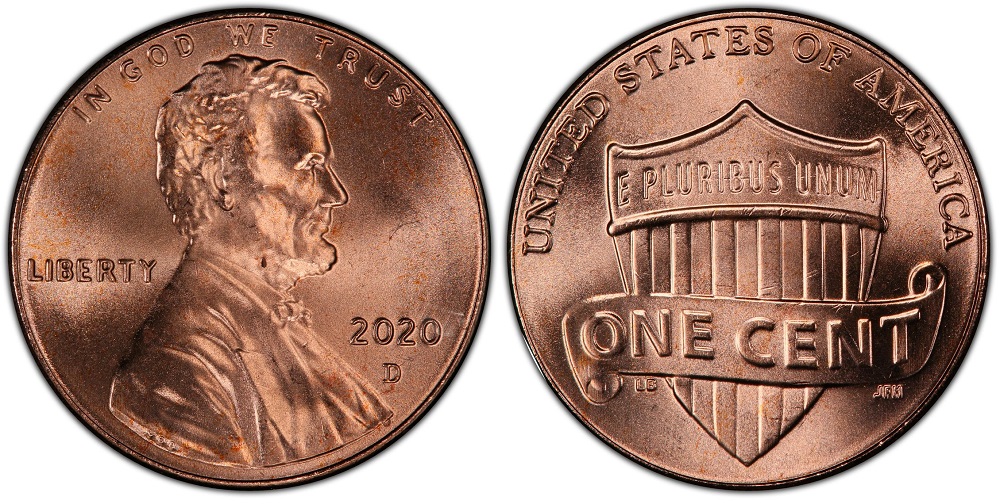
Lincoln's high-point cheek and hair show visible flatness. Shield lines on reverse may be weak. Little or no luster. Color is usually brown. Worth face value in any circulated grade.
Trace wear on Lincoln's cheek and the top of the shield only. Substantial luster remains — look for a slight break in the luster on the high points. Worth $0.50–$2 depending on AU grade and color.
No wear. Grade determined by number of contact marks (bag marks), luster quality, and strike sharpness. MS63 allows several light marks; MS65 (gem) allows only minor marks not in focal areas. Value $0.36–$13.
Virtually flawless surfaces with full, blazing original mint luster and at least 95% red color (RD designation). MS67RD is worth $25–$50; MS68RD is scarce ($150–$5,040 for Denver); MS69RD exists for P only (~15 known).
📱 CoinHix helps you cross-check your condition assessment against graded examples in its database — a coin identifier and value app.
Where to Sell Your Valuable 2020 Penny
The right venue depends on what your coin is worth. A circulated 2020 penny belongs on eBay; a 2020-D MS68RD belongs at Heritage Auctions.
🏛 Heritage Auctions
Best for: MS67RD and higher, confirmed error coins worth $200+, certified slabs. Heritage reaches the largest audience of serious Lincoln cent collectors and consistently achieves top prices for premium grade examples. The $5,040 record for the 2020-D MS68RD was set here. Minimum lot values apply, so this isn't the right fit for common examples.
🛒 eBay
Best for: MS65–MS66 certified coins, minor error varieties, BIE errors, off-center strikes in the $10–$75 range. Check recently sold prices for 2020 Lincoln Shield cents on eBay to set a realistic asking price before listing. Filter to "Sold Listings" only — active listings show what sellers ask, not what buyers pay.
🏪 Local Coin Shop
Best for: Quick cash on common 2020 pennies or raw (ungraded) examples. Expect offers at 30–50% of retail on low-to-mid grade coins — dealers need a margin. If you have a potential error or high-grade coin, get a second opinion before accepting a local offer. Useful for building relationships and getting free preliminary opinions on your coin's grade.
💬 Reddit (r/Coins4Sale)
Best for: Mid-tier 2020 pennies in the $5–$50 range, including BIE errors, DDR varieties, and raw MS65–MS66 examples. The community is knowledgeable and prices are fair. Post clear photos under good lighting and include a ruler for scale. Reddit buyers often pay closer to retail than dealers since they're collectors, not resellers.
Frequently Asked Questions — 2020 Penny Value
How much is a 2020 penny worth?
Most circulated 2020 pennies are worth face value — 1 cent. In uncirculated condition (MS65), they're worth around $0.36 to $0.40. High-grade gems like MS67 can fetch $25–$45, while the top recorded sale was a 2020-D MS68RD that sold for $5,040 at Heritage Auctions in January 2021. Error coins like the Doubled Die Obverse can add $25–$150+ depending on severity.
What makes a 2020 penny valuable?
Three factors drive 2020 penny value: condition, mint mark, and errors. Coins graded MS67 or higher in full Red (RD) designation command strong premiums because so few survive bag handling without contact marks. The Denver mint's MS68RD coins are paradoxically scarcer than Philadelphia's despite higher mintage, since Denver coins entered wider distribution. Confirmed error varieties — DDO, off-center, wrong planchet — also add significant collector value.
What is a 2020-D penny worth?
Circulated 2020-D pennies are worth face value. Uncirculated examples in MS65 grade are worth around $0.36–$0.40. A 2020-D MS67RD fetches roughly $30–$50. The record sale was $5,040 for a PCGS MS68RD at Heritage Auctions in January 2021 — the most valuable business-strike 2020 penny ever recorded. Fewer than 10 examples are known in MS69RD, making those potentially worth even more.
How many 2020 pennies were made?
Philadelphia struck approximately 3,560,800,000 pennies in 2020 with no mint mark, while Denver struck approximately 4,035,600,000 bearing a 'D' mint mark. The San Francisco Mint produced 823,909 proof coins specifically for collectors. Combined business-strike production exceeded 7.5 billion coins, making the 2020 penny one of the most plentiful dates in modern coinage — but top-grade examples are genuinely scarce.
What is a 2020 DDO penny error worth?
A 2020 Doubled Die Obverse (DDO) penny is worth $25–$50 for minor doubling in circulated or lower Mint State grades. Stronger DDO examples — showing clear doubling on 'LIBERTY,' the date numerals, or Lincoln's eye — can fetch $100–$150 in MS67 grade. The most dramatic documented DDO varieties on 2020 pennies (WDDO-001 and related die marriages) push values higher for certified specimens.
What is the difference between a 2020-P and 2020-D penny?
Both are identical in design — Lincoln obverse, Union Shield reverse — but struck at different mints. Philadelphia pennies (2020-P) carry no mint mark and had a mintage of about 3.56 billion. Denver pennies (2020-D) show a small 'D' beneath the date and had a mintage of about 4.04 billion. Paradoxically, top-grade 2020-D MS68RD coins are rarer and more valuable than 2020-P equivalents because Denver's coins entered wider circulation channels.
Is a 2020-S penny rare?
Yes, relative to business strikes. Only 823,909 proof pennies were struck in San Francisco in 2020, exclusively for collector sets — not for circulation. Each 2020-S penny has mirror-like fields and frosted devices. In PR65 condition, they're worth around $2.60–$5. PR69DCAM and PR70DCAM examples command higher premiums. You'll never find one in pocket change since they were sold directly in proof sets.
How do I know if my 2020 penny is an error coin?
Check for these signs with a 10× loupe: doubled letters or date (DDO/DDR), off-center design with a visible blank area (off-center strike), a 'BIE' — raised vertical line between the 'B' and 'E' in LIBERTY (die crack error), visible raised lines crossing the coin (die cracks), or unusual weight/color suggesting a wrong planchet. Compare your coin to certified examples on PCGS CoinFacts or Wexler's Die Variety News for confirmation.
What does RD mean on a 2020 penny grade?
RD stands for Red — the highest color designation for Lincoln cents. A coin graded MS65RD retains 95% or more of its original orange-red mint luster. RD coins command the highest prices. Red-Brown (RB) coins have partially toned, earning lower premiums. Brown (BN) coins have fully toned and are worth the least among uncirculated examples. For 2020 pennies, always look for the RD suffix when buying or selling in higher grades.
Where can I sell a valuable 2020 penny?
For pennies worth $25 or less, eBay reaches the most buyers quickly. For MS67RD and higher, PCGS or NGC certification before selling is strongly recommended and will increase realized prices. Heritage Auctions and Stack's Bowers are the top venues for MS68RD or error coins likely worth $200+. Local coin shops offer quick cash but typically pay below retail. Reddit's r/Coins4Sale community works well for mid-tier examples with visible errors.
Ready to find out what your 2020 penny is worth?
→ Use the Free Calculator Now